Hosted by the Ohio BWC North Canton Service Office, this training qualifies for 1 safety council external training credit.
Please Note: this is not a PCSC sponsored event, please see appropriate contact on the flyer for additional information.
Hosted by the Ohio BWC North Canton Service Office, this training qualifies for 1 safety council external training credit.
Please Note: this is not a PCSC sponsored event, please see appropriate contact on the flyer for additional information.
Question:
So, you want to grow out your beard, but wear a tight-fitting respirator at work?
Answer:
Ensuring the respirator seal is a vital part of respiratory protection practices. Facial hair that lies along the sealing area of a respirator, such as beards, sideburns, or some mustaches, will interfere with respirators that rely on a tight face piece seal to achieve maximum protection. Facial hair is a common reason that someone cannot be fit tested.
The reason for this is simple – gases, vapors, and particles in the air will take the path of least resistance and bypass the part of the respirator that captures or filters hazards out. So then, why can’t facial hair act as a crude filter to capture particles that pass between the respirator sealing area and the skin? While human hair appears to be very thin to the naked eye, hair is much larger in size than the particles inhaled. Facial hair is just not dense enough and the individual hairs are too large to capture particles like an air filter does; nor will a beard trap gases and vapors like the carbon bed in a respirator cartridge. Therefore, the vast majority of particles, gases, and vapors follow the air stream right through the facial hair and into respiratory tract of the wearer. In fact, some studies have shown that even a day or two of stubble can begin to reduce protection. Research tells us that the presence of facial hair under the sealing surface causes 20 to 1000 times more leakage compared to clean-shaven individuals.
The Respiratory Protection standard, paragraph 29 CFR 1910.134(g)(1)(i)(A), states that respirators shall not be worn when facial hair comes between the sealing surface of the facepiece and the face or that interferes with valve function. Facial hair is allowed as long as it does not protrude under the respirator seal, or extend far enough to interfere with the device’s valve function. Short mustaches, sideburns, and small goatees that are neatly trimmed so that no hair compromises the seal of the respirator usually do not present a hazard and, therefore, do not violate paragraph 1910.134(g)(1)(i).
Provided by Ohio BWC staff.
Use this discussion guide from the Ohio BWC to talk to your staff on how to prevent slips, trips, & falls at your facility.
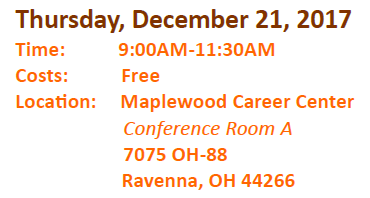
Description: Do you know the difference between OSHA and PERRP? Did you know that the Ohio Revised Code statutes recently changed that govern PERRP operations? This seminar will help you understand the differences between the two agencies and provide an overview of the recent statute changes. Attend this seminar and learn how the changes will impact Ohio public employers. Next spring a new public employer safety and health recognition program will roll out across Ohio. Is your workplace ready to meet the challenge and participate in this unique program?
Seminar Learning Objectives:
This training event is hosted by the North Canton Service Office of the Ohio BWC. It is not a PCSC event but does qualify for 1 external training credit.
Question:
Do I need to inspect the walking -working surfaces in my facility?
Answer:
Yes, according to OSHA’s revised walking-working surfaces rule. OSHA’s definition of a walking-working surface is any horizontal or vertical surface on or through which an employee walks, works, or gains access to a work area or workplace location. The employer must inspect the surfaces, regularly and as necessary, to ensure they are maintained in a safe condition. If a hazardous condition is recognized, the condition is to be corrected or repaired before an employee uses the surface again. If the correction or repair cannot be made immediately, the hazard must be guarded to prevent employees from using the surface. Hazardous conditions may include sharp or protruding objects, loose boards, corrosion, leaks, spills, snow, and ice. For more information on the revised rule, see Subpart D of 29 CFR 1910.
Brought to you by Ohio BWC safety consultants.
Date: Tuesday, March 27, and Wednesday, March 28, 2018
Time: 8:00am-5:00pm
Location: Maplewood Career Center, 7075 St Rt 88, Ravenna, OH 44266
Price: $245 for up-to-date PCSC members (seating is limited to 10 people total)
Registration Deadline: December 31, 2017 (payment required at registration and based on first come/first served)
Click here for the registration form.

Question:
What does OSHA require regarding violence in the workplace and active shooter programs and training?
Answer:
OSHA does not have a specific standard on violence in the workplace or active shooter/ active aggressor situations. However, under the General Duty Clause, Section 5(a)(1) of the Occupational Safety and Health Act (OSHA) of 1970, employers are required to provide their employees with a place of employment that “is free from recognizable hazards that are causing or likely to cause death or serious harm to employees.” An employer that has experienced acts of workplace violence, or becomes aware of threats, intimidation, or other indicators showing that the potential for violence in the workplace exists, would be on notice of the risk of workplace violence and should implement a workplace violence prevention program combined with engineering controls, administrative controls, and training.
There are many options to start on this journey. The BWC has a half day violence in the workplace class and your BWC consultant or local law enforcement can help you create a policy. Training can be done in-house, online or with your local law enforcement. There are many companies that focus on security and violence in the workplace if you are interested in seeking other outside help. Two well known training programs dealing with active shooters are: The Department of Homeland Security’s: Run, Hide, Fight and the ALiCE method offered by the ALiCE training institute.
Brought to you by Ohio BWC safety consultants.
Our next meeting is Thursday, August 10, 2017, 11:30am-1:00pm, at the Ravenna Elks Club which is located at 776 N Freedom St in Ravenna. Sponsored by University Hospitals Portage Medical Center.
Effective Safety Teams & Leadership Panel: How to Cultivate Safety Habits in the Workplace.
Panel Speakers:
Have questions for the panel? Please email them to the Safety Council by Tuesday, August 8. We’ll pick the top questions to ask our panel.
This training is ideal for HR managers, safety managers, CEO’s and all staff!
Please RSVP no later than 12pm on Monday, August 7, 2017.
Please make your check payable to: “Portage County Safety Council.” If you would like to pay by credit card prior to the event, please email us for an invoice. Cost for lunch is still just $15/person for members and $20 for non-members.
The enrollment deadline in order to qualify for the FY18 Ohio BWC premium rebate though the Portage County Safety Council is July 31st.
 Portage County Safety Council
You must be logged in to post a comment.