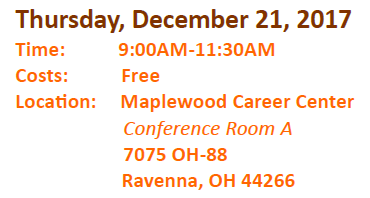
Hosted by the Ohio BWC North Canton Service Office, this training qualifies for 1 safety council external training credit.
Please Note: this is not a PCSC sponsored event, please see appropriate contact on the flyer for additional information.
Hosted by the Ohio BWC North Canton Service Office, this training qualifies for 1 safety council external training credit.
Please Note: this is not a PCSC sponsored event, please see appropriate contact on the flyer for additional information.
Question:
So, you want to grow out your beard, but wear a tight-fitting respirator at work?
Answer:
Ensuring the respirator seal is a vital part of respiratory protection practices. Facial hair that lies along the sealing area of a respirator, such as beards, sideburns, or some mustaches, will interfere with respirators that rely on a tight face piece seal to achieve maximum protection. Facial hair is a common reason that someone cannot be fit tested.
The reason for this is simple – gases, vapors, and particles in the air will take the path of least resistance and bypass the part of the respirator that captures or filters hazards out. So then, why can’t facial hair act as a crude filter to capture particles that pass between the respirator sealing area and the skin? While human hair appears to be very thin to the naked eye, hair is much larger in size than the particles inhaled. Facial hair is just not dense enough and the individual hairs are too large to capture particles like an air filter does; nor will a beard trap gases and vapors like the carbon bed in a respirator cartridge. Therefore, the vast majority of particles, gases, and vapors follow the air stream right through the facial hair and into respiratory tract of the wearer. In fact, some studies have shown that even a day or two of stubble can begin to reduce protection. Research tells us that the presence of facial hair under the sealing surface causes 20 to 1000 times more leakage compared to clean-shaven individuals.
The Respiratory Protection standard, paragraph 29 CFR 1910.134(g)(1)(i)(A), states that respirators shall not be worn when facial hair comes between the sealing surface of the facepiece and the face or that interferes with valve function. Facial hair is allowed as long as it does not protrude under the respirator seal, or extend far enough to interfere with the device’s valve function. Short mustaches, sideburns, and small goatees that are neatly trimmed so that no hair compromises the seal of the respirator usually do not present a hazard and, therefore, do not violate paragraph 1910.134(g)(1)(i).
Provided by Ohio BWC staff.
Hello Safety Council Members:
At our last monthly meeting on 12/14/17 regarding office ergonomics, Kelly Ott, an Ergonomic Consultant for the Ohio BWC Canton Service Office, offered to conduct free onsite ergonomics reviews. If you or your company is interested in her services, please see her contact information below:

Welcome to the first edition of our new monthly newsletter!
Our goal for the newsletter is to connect our members to relevant safety resources, all linked together in one convenient location every month. We hope you find this resource useful and valuable!
SAFETY RESOURCES:
PCSC NEWS:
Use this discussion guide from the Ohio BWC to talk to your staff on how to prevent slips, trips, & falls at your facility.
As many of you know, we recently have launched the Portage County Safety Council Podcast. We realize that some of our members may not be familiar with podcasting so we thought it would be fun to write a quick blog to link those members to some great podcasting info.
Don’t worry! If you already know what a podcast is, we included some pretty cool stats that you may enjoy (see graphic below).
Courtesy of Podcast Insights.com.

Description: Do you know the difference between OSHA and PERRP? Did you know that the Ohio Revised Code statutes recently changed that govern PERRP operations? This seminar will help you understand the differences between the two agencies and provide an overview of the recent statute changes. Attend this seminar and learn how the changes will impact Ohio public employers. Next spring a new public employer safety and health recognition program will roll out across Ohio. Is your workplace ready to meet the challenge and participate in this unique program?
Seminar Learning Objectives:
Brought to you by the Ohio BWC Library…
This training event is hosted by the North Canton Service Office of the Ohio BWC. It is not a PCSC event but does qualify for 1 external training credit.
“Reducing lower-back injuries with a privacy-aware compliance tracking system,” presented by Dr. Wenbing Zhao, Professor, Department of Electrical Engineering and Computer Science at Cleveland State University.
Hosted by the American Society of Safety Engineers Northern Ohio Chapter. Please note: this is not a PCSC sponsored event.
Date: Thursday, January 18, 2018
Time: 5:30pm
Location: Creekside Restaurant, 8803 Brecksville Rd, Brecksville, OH 44141.
You must be logged in to post a comment.